
































Custom cattle ear tags play an important role in modern livestock management, helping farmers track identification, breeding records, health history, and ownership more efficiently. Today, there are several ways to produce cattle ear tags, including manual stamping, rotary engraving, and laser engraving. Each method offers different levels of durability, precision, and production speed.
For UK livestock owners and small farm workshops, laser engraving has become an increasingly popular option because it creates clear, long-lasting markings with minimal maintenance.
In this guide, we'll compare the most common cattle ear tag making methods, explain why laser engraving stands out, and show you how to create professional-quality custom cattle ear tags using a laser engraver.

In this guide:
- Part 1: 3 Popular Methods for Making Custom Cattle Ear Tags
- Method 1: Marking or Stamping
- Method 2: Rotary Engraving
- Method 3: Laser Engraving
- Part 2: Why Laser Engraving Is the Best Choice for Custom Cattle Ear Tags
- Part 3: How to Make Custom Cattle Ear Tags with Laser Engraving
- FAQs: Common Questions About Making Custom Cattle Ear Tags
Part 1: 3 Popular Methods for Making Custom Cattle Ear Tags
There's no single way to make custom cattle ear tags. The best method depends on factors such as tag durability, production quantity, material type, and the level of detail required. Some methods are better suited to quick on-farm identification, while others are designed for durable, professional livestock tracking.
Below are the three most common methods used to produce custom cattle ear tags today.
Method 1: Make Custom Cattle Ear Tags with Manual Marking
Manual marking is one of the most basic ways to create custom cattle ear tags. In this process, farmers write or stamp identification numbers onto pre-made plastic or rubber tags using permanent markers, embossing pens, or metal stamps.
This method is often used on small UK farms where only a limited number of tags are required quickly. Because the tags can be labelled directly on-site, manual marking is convenient for temporary identification or emergency replacements.
However, since the markings are added by hand, readability and durability can vary significantly over time. Exposure to rain, mud, sunlight, and daily livestock movement may cause the markings to fade or become difficult to read.
Pros
- Very low-cost method with minimal tools required
- Suitable for quick, temporary identification
- No electricity or specialised equipment needed
Cons
- Markings may fade after long-term outdoor use
- Inconsistent alignment and handwriting quality
- Not practical for large-scale livestock management
Method 2: Make Custom Cattle Ear Tags with Rotary Engraving
Rotary engraving uses a high-speed rotating cutting tool to carve identification details directly into cattle ear tags. The engraving bit removes a thin layer of material, creating permanent markings on plastic or metal surfaces.
This method is commonly used in workshops and small production environments where long-lasting identification tags are needed. Because the markings are physically engraved into the material, they are generally more durable than printed or hand-written labels.
However, rotary engraving is a contact-based process. The cutting tool touches the surface during engraving, which may leave slight tool marks or place stress on softer plastic materials.
Pros
- Produces durable and permanent markings
- More resistant to fading than printed labels
- Suitable for small to medium production batches
Cons
- Requires dedicated engraving equipment
- Contact engraving may leave tool marks
- Less suitable for highly detailed graphics or QR codes
Method 3: Make Custom Cattle Ear Tags with Laser Engraving
Laser engraving is one of the most advanced methods for producing custom cattle ear tags. A focused laser beam permanently engraves identification numbers, letters, barcodes, or QR codes onto the tag surface without physically touching the material.
Because the process is digitally controlled, every tag maintains consistent positioning, spacing, and readability. This makes laser engraving ideal for farms, breeders, and livestock suppliers that require professional-quality identification tags with high durability.

Source: LaserPecker User Group
For UK livestock owners, laser engravers are increasingly popular for producing customised tags in home workshops or small agricultural businesses. The non-contact engraving process also helps prevent bending, scratching, or damaging plastic tags during production.
In addition, laser engraving delivers excellent long-term readability even after prolonged exposure to outdoor farm environments.
Pros
- Produces highly accurate and consistent markings
- Supports barcodes, QR codes, and detailed serial numbers
- Compatible with many plastic tag materials
- Non-contact process reduces material damage
- Suitable for repeat batch production
Cons
- Requires access to a laser engraving machine
- Higher initial equipment investment
Comparison Table of Custom Cattle Ear Tag Making Methods
| Method | Precision | Materials | Setup Cost | Batch Consistency | Custom Detail Level | Best For |
|---|---|---|---|---|---|---|
| Manual Marking or Stamping | Low | Plastic, rubber | Very Low | Low | Low | Quick temporary farm tags |
| Rotary Engraving | Medium–High | Plastic, metal | Medium | High | Medium | Durable livestock identification |
| Laser Engraving | Very High | Plastic, coated metal | Medium | Very High | High | Professional, long-lasting cattle ear tags |
Part 2: Why Laser Engraving Is the Best Choice for Making Custom Cattle Ear Tags
Laser engraving has become one of the most efficient and reliable ways to produce custom cattle ear tags for modern livestock management. By using a digitally controlled laser beam, farms and livestock suppliers can create highly accurate, durable, and consistent identification markings while improving production efficiency.
Pinpoint Accuracy
Laser engraving can produce extremely precise numbers, letters, barcodes, and QR codes on cattle ear tags. Because the engraving is digitally controlled, every marking is positioned accurately and remains easy to read, even on smaller tag designs.
Consistent Batch Production
Unlike manual marking methods, laser engraving follows the same digital design file for every tag. This ensures consistent layouts, spacing, and readability across large production batches, making it ideal for professional livestock identification systems.
Flexible Customisation
Laser engraving allows users to customise almost every part of the tag design, including:
- Tag shapes and sizes
- Serial numbers and livestock IDs
- Logos, barcodes, and QR codes
- Text positioning and layout
For UK farms and agricultural workshops, this flexibility makes it easier to update identification systems without replacing moulds or purchasing additional tooling.
Non-Contact Engraving Process
Because the laser never physically touches the material, there is no direct pressure placed on the plastic tag surface. This helps prevent bending, cracking, scratching, or material deformation during engraving.
Compared to rotary engraving, the non-contact process also produces cleaner and more professional-looking results.
Efficient Production Workflow
Many modern laser systems can engrave and cut cattle ear tags within the same workflow. This reduces production time and improves efficiency for farms, livestock suppliers, and small agricultural businesses producing tags in batches.
In addition, laser engraving systems are highly suitable for indoor workshop environments when paired with proper safety accessories and air filtration systems.
Recommended Fibre Laser Engraver for Cattle Ear Tags
For farms, livestock suppliers, and workshops looking for precise and durable tag production, the LaserPecker LP5 is an excellent fibre laser engraver for producing professional-quality cattle ear tags.
The LaserPecker LP5 combines a 20W fibre laser and a 20W diode laser, allowing it to engrave a wide range of materials, including plastics, coated metals, and other commonly used livestock tag materials. With engraving speeds of up to 10,000 mm/s, it is well suited for batch production while maintaining highly detailed engraving quality.
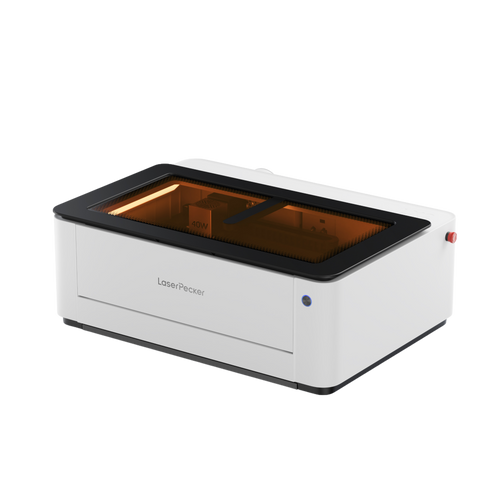
For users in the UK who prioritise workshop safety, the LaserPecker LP5 can also be paired with the LaserPecker LP5 Safety Enclosure to achieve Class 1 Laser Safety standards. This makes indoor engraving safer and more suitable for home workshops or enclosed working environments.
The LP5 can also work together with the LaserPecker Desktop Smoke Purifier, which helps filter smoke, airborne particles, and odours generated during engraving and cutting. This improves air quality and supports safer indoor operation.
Key Features
- Dual-laser system for engraving multiple material types
- High-speed engraving for batch production
- Precise digital control for consistent tag layouts
- Compatible with SVG, PNG, and DXF design files
- Supports both computer and mobile app control
- Can achieve Class 1 Laser Safety with the LaserPecker LP5 Safety Enclosure
- Compatible with the LaserPecker Desktop Smoke Purifier for cleaner indoor use
With its precision, speed, and flexible material compatibility, the LaserPecker LP5 is highly suitable for creating durable cattle ear tags with engraved numbers, QR codes, serial identifiers, and livestock tracking information.

Part 3: How to Make Custom Cattle Ear Tags with Laser Engraving
Laser engraving makes it possible for farms, livestock suppliers, and agricultural workshops to produce durable custom cattle ear tags with professional-quality results. With the right materials and a digital design file, tags can be engraved with clear identification numbers, QR codes, serial markings, or logos while maintaining excellent consistency across every batch.
Recommended Materials
- Plastic or TPU sheets — Durable, flexible, and suitable for long-term livestock use
- Coloured plastic tags — Easier to identify from a distance and useful for livestock grouping
- Protective-coated materials (optional) — Help improve weather resistance and outdoor durability
Tools Required
- Laser engraving machine for plastic
- Vector design software such as CorelDRAW or Adobe Illustrator
- Ear tag applicator for attaching tags securely
- Optional ventilation or smoke purification system for indoor engraving environments
For UK users operating in enclosed workshops or indoor farm workspaces, pairing the LaserPecker LP5 with the LaserPecker Desktop Smoke Purifier can help filter smoke, odours, and airborne particles generated during engraving.
Step-by-Step Process
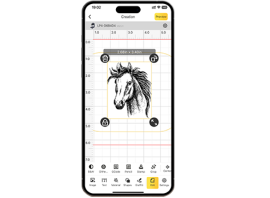
Step 1: Create the Ear Tag Design
Use vector design software to create the identification layout for the cattle ear tag. This may include:
- Livestock ID numbers
- Farm logos
- Barcodes
- QR codes
- Text labels
Keep all engraving elements clearly organised within the design file to ensure accurate laser positioning. Make sure the text size and spacing remain easy to read after engraving.
Step 2: Prepare the Tag Material
Place the plastic or TPU tag material flat inside the LaserPecker LP5 working area. Ensure the material is properly secured and does not move during engraving.
Before starting, use the software positioning tools to align the design accurately on the tag surface. Proper alignment helps maintain consistent engraving results across multiple tags.
Step 3: Adjust the Laser Settings
Set the laser power, engraving speed, and focus according to the tag material being used. Different plastics and coated materials may require slightly different settings for optimal engraving clarity.
The LaserPecker LP5 supports multiple laser modes for engraving various materials, making it easier to achieve durable and high-contrast markings.
For best results, test the settings on a spare tag before beginning full production.
Step 4: Engrave the Identification Details
Start engraving the identification numbers, letters, logos, or QR codes onto the cattle ear tag.
Because the LaserPecker LP5 follows a digital design file, each engraving remains highly precise and consistent, even during batch production.
The non-contact laser process also helps prevent scratches, bending, or surface damage on softer plastic materials.
Step 5: Inspect the Engraving Quality
After engraving is complete, check the tag carefully to ensure:
- The markings are clear and readable
- QR codes scan correctly
- The engraving depth is consistent
- The positioning is accurate
If necessary, make small adjustments to the laser settings to improve contrast or engraving depth.
Step 6: Attach the Ear Tag
Use an ear tag applicator to attach the engraved tag securely to the animal.
Correct placement helps keep the identification visible while reducing the risk of tag loss during long-term livestock use.
Additional Safety Tip for Indoor Workshops
For safer indoor operation, the LaserPecker LP5 can be paired with the LaserPecker LP5 Safety Enclosure to achieve Class 1 Laser Safety protection. This helps create a more enclosed and controlled engraving environment for workshops and small agricultural businesses.
FAQs: Common Questions About Making Custom Cattle Ear Tags
Q1. What is the best method for making cattle ear tags?
Laser engraving is widely considered one of the best methods for producing custom cattle ear tags because it combines precision, durability, and flexible customisation. Compared with manual marking or rotary engraving, laser engraving produces cleaner and more consistent identification markings, especially for farms managing larger numbers of livestock.
Q2. Are laser-engraved cattle ear tags durable enough for outdoor farm use?
Yes. When durable materials such as TPU or livestock-grade plastics are used, laser-engraved cattle ear tags can withstand rain, mud, UV exposure, and everyday farm conditions.
Because the markings are engraved directly into the material rather than printed on the surface, they are far less likely to fade or wear away over time.
Q3. Can QR codes and barcodes be engraved onto cattle ear tags?
Yes. Laser engraving offers excellent precision, making it ideal for engraving:
- QR codes
- Barcodes
- Serial numbers
- Livestock identification numbers
These codes can be scanned easily as part of modern digital livestock management and animal traceability systems.
Q4. Is laser engraving safe for livestock ear tags?
Yes. The laser only engraves the tag material before the tag is attached to the animal. When livestock-safe materials are used, the finished cattle ear tags remain lightweight, durable, and comfortable for animals to wear.
For safer indoor operation, many UK users also pair the LaserPecker LP5 with the LaserPecker LP5 Safety Enclosure to achieve Class 1 Laser Safety protection during engraving.
Q5. How much does it cost to make custom cattle ear tags?
The total cost depends on:
- Tag material
- Tag size
- Production quantity
- Equipment used
Manual marking has the lowest upfront cost, while laser engraving requires a higher initial investment. However, for farms that regularly produce cattle ear tags, laser engraving can significantly reduce long-term production costs while improving consistency and durability.
Q6. What material is best for cattle ear tags?
TPU and livestock-grade plastics are among the most commonly used materials because they are:
- Flexible
- Weather-resistant
- Durable
- Comfortable for animals
These materials also work well with laser engraving and maintain readable markings for long-term outdoor use.
Q7. Can a fibre laser engraver cut cattle ear tags as well?
Yes. Some modern systems, such as the LaserPecker LP5, combine fibre and diode laser technology, allowing users to engrave identification details and process certain tag materials within the same workflow.
This improves efficiency for farms and agricultural workshops producing customised cattle ear tags in batches.
Q8. Do I need ventilation when laser engraving plastic ear tags?
Yes. Laser engraving plastic materials may generate smoke, fumes, or odours during processing.
For cleaner indoor operation, many workshops use the LaserPecker Desktop Smoke Purifier to help filter airborne particles and improve air quality during engraving.
Conclusion
Cattle ear tags play an important role in modern livestock identification and day-to-day farm management. Although traditional marking methods are still used on some farms, laser engraving offers a more precise, durable, and flexible solution for producing professional-quality identification tags.
With advanced systems such as the LaserPecker LP5, farms, breeders, and livestock suppliers can create highly readable cattle ear tags featuring serial numbers, barcodes, and QR identifiers with consistent engraving quality. The non-contact engraving process also helps protect the tag material while improving long-term durability in outdoor farming environments.
For UK users operating indoor workshops or agricultural workspaces, the LP5 can also be paired with the LaserPecker LP5 Safety Enclosure for Class 1 Laser Safety protection, as well as the LaserPecker Desktop Smoke Purifier for cleaner and safer indoor engraving.
Overall, laser engraving provides a reliable and customisable method for producing durable cattle ear tags for modern livestock tracking and identification systems.