





























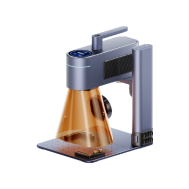


Leather may seem straightforward to cut, but different leather types, thicknesses, and surface finishes require different tools and techniques. Choosing the wrong cutter can lead to uneven edges, wasted material, and poor-quality results, especially for beginners or small workshop users.
In this guide, we'll explore the most recommended leather cutting tools for 2026, including laser cutters, CNC machines, leather knives, and rotary cutters. You'll learn the advantages, limitations, and ideal use cases for each option, helping you choose the right solution for DIY crafts, personalised leather goods, or professional leatherworking businesses in the UK.

In this article:
- Part 1: What Are Leather Cutting Tools?
- Part 2: Four Best Cutting Tools for Leather
- Type 1: Laser Cutting Machines for Leather
- Type 2: CNC Leather Cutters
- Type 3: Manual Leather Knives
- Type 4: Handheld Rotary Cutters
- Part 3: How to Choose the Right Leather Cutting Tool for You
- Part 4: Common Leather Cutting Mistakes to Avoid
- Part 5: FAQs About Leather Cutting Tools
Part 1: What Are Leather Cutting Tools?
Leather cutting tools are specialised hand tools or machines designed to cut leather neatly and accurately into specific shapes and patterns. Unlike paper or fabric, leather has varying densities, grain directions, and surface textures, all of which affect how it reacts during cutting. Some leather types are tougher to cut, while softer varieties may stretch or shift during the process. Thick leather hides can also dull standard blades quite quickly.
Because of these differences, leather cutting tools range from traditional craft knives to advanced automated cutting machines. Each option is suited to different needs depending on cutting precision, production volume, material thickness, and design complexity. For UK hobbyists and small workshop users, choosing the right tool can improve both cutting quality and working efficiency.
Part 2: Four Best Cutting Tools for Leather
There's no single leather cutting tool that suits every project. The best option depends on your workflow, production volume, material thickness, and the level of detail you need. Below are four of the most commonly used leather cutting tools in 2026.
Type 1: Laser Cutting Machines for Leather
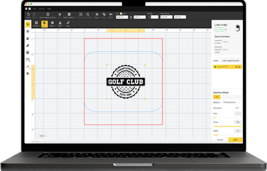
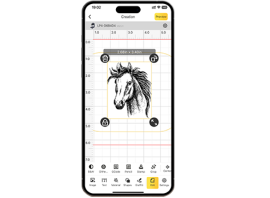
Laser leather cutting machines use a focused laser beam guided by digital design software to cut leather accurately. The laser follows a programmed cutting path and separates the leather fibres without direct physical contact, helping reduce material distortion and uneven edges.
Because the process is fully computer-controlled, laser cutters can produce highly detailed shapes, smooth curves, and intricate patterns with excellent consistency. Many machines also support engraving, allowing users to create personalised logos, textures, and decorative details in a single workflow.
Advantages of Laser Leather Cutters
- Extremely precise for fine details and lace-style patterns
- Ideal for customised leather goods and personalised products
- Consistent digital cutting results with minimal manual adjustment
- Supports both cutting and engraving in one machine
- Suitable for small businesses, Etsy sellers, and workshop creators
Things to Consider
Laser cutting may not be the best option for very thick, oily, or chrome-tanned leather. Proper ventilation is also important, as cutting leather can produce fumes and odours during operation.
For users in the UK who work indoors or in compact workshops, pairing laser machines with a smoke purification system can help improve workspace safety and comfort. Compact models with enclosed protection systems are also becoming increasingly popular among home-based makers.
Laser cutters are commonly used for:
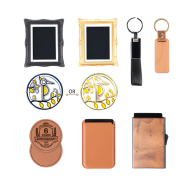
- Leather earrings
- Wallet designs
- Decorative panels
- Personalised accessories
- Small-batch leather production
Type 2: CNC Leather Cutters
CNC leather cutters use computer-controlled blades, such as oscillating knives or drag knives, to cut leather based on digital design files. During operation, the cutting head moves automatically along programmed paths while the blade vibrates or slides through the leather material.
To use a CNC cutter, the leather sheet is secured onto a flat cutting bed using clamps or vacuum suction. Once the digital pattern is loaded, the machine completes the cutting process with minimal manual intervention.
This method is widely used in industrial leather manufacturing because it offers stable cutting quality and efficient handling of thick or dense leather materials.
Advantages of CNC Leather Cutters
- Effective for thick leather and large-format materials
- Fast cutting speeds for mass production
- Reliable consistency for repeated designs
- Suitable for industrial manufacturing workflows
Limitations
- Requires significant workspace
- Higher upfront equipment cost
- Less flexible for frequent design changes
- Usually unsuitable for small studios or home workshops
CNC leather cutters are generally more suitable for factories and production facilities than individual leather crafters.
Type 3: Manual Leather Knives
Manual leather cutting tools include utility knives, craft knives, and traditional leather knives. These tools rely entirely on hand pressure and blade control to cut through leather fibres along marked cutting lines.
To use them effectively, the leather is placed on a cutting mat and the design is marked beforehand. Many users also rely on rulers or templates to improve cutting accuracy. For thicker leather, multiple cutting passes are often required.
Although this method is affordable and flexible, achieving clean and consistent results depends heavily on blade sharpness and user experience.
Advantages of Manual Leather Knives
- Affordable and widely available
- Good control for straight cuts and basic shapes
- No electricity or software required
- Ideal for traditional handcraft workflows
Limitations
- Strongly skill-dependent
- Difficult to maintain consistency across repeated cuts
- Less effective for intricate patterns or complex curves
- Slower for larger production runs
Manual leather knives are often preferred by beginners and traditional leather artisans who enjoy hands-on craftsmanship.
Type 4: Handheld Rotary Cutters
Handheld rotary cutters use a circular rotating blade that rolls across the leather surface rather than cutting directly downward. As the blade spins during movement, it creates smoother cutting motion with reduced hand strain.
To use one, the leather is placed on a cutting mat while a ruler or guide helps maintain alignment. Rotary cutters work best for long straight cuts or gentle curves on thinner leather materials.
Advantages of Rotary Cutters
- Faster than manual knives for long cuts
- Smooth rolling action reduces hand fatigue
- Easy to learn for beginners
- Effective on soft and thin leather sheets
Limitations
- Limited precision for tight curves and fine details
- Not suitable for thick or rigid leather
- Cannot engrave patterns or decorative textures
- Less effective for detailed finishing work
Rotary cutters are commonly used for pattern preparation and simple cutting tasks rather than decorative leather crafting.
Comparison Table of Leather Cutting Tools
| Tool Type | Precision | Ease of Use | Best For | Custom Designs | Scalability |
|---|---|---|---|---|---|
| Laser Cutting Machines | Very High | Easy (Digital) | Detailed designs, personalised products, earrings | Excellent | High |
| CNC Leather Cutters | High | Moderate | Industrial production | Limited | Very High |
| Manual Leather Knives | Medium | Skill-Based | Traditional leatherwork, simple cuts | Low | Low |
| Rotary Cutters | Medium | Easy | Straight cuts and pattern prep | Low | Low |
Overall, these leather cutting tools differ significantly in precision, efficiency, scalability, and creative flexibility.
Manual knives and rotary cutters remain affordable and adaptable, but they depend heavily on user skill and are better suited to simple designs or occasional projects. CNC leather cutters improve production efficiency and consistency, though they typically require more space, setup, and technical knowledge.
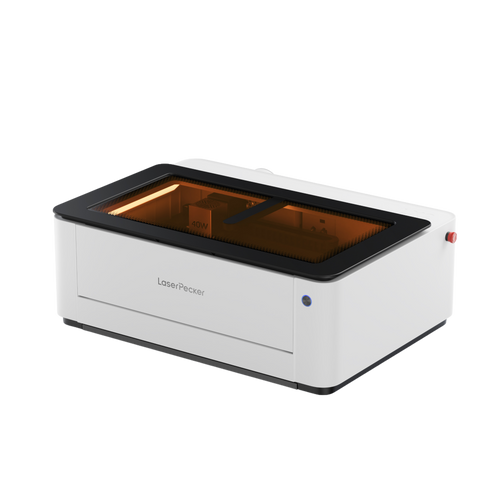
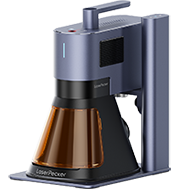
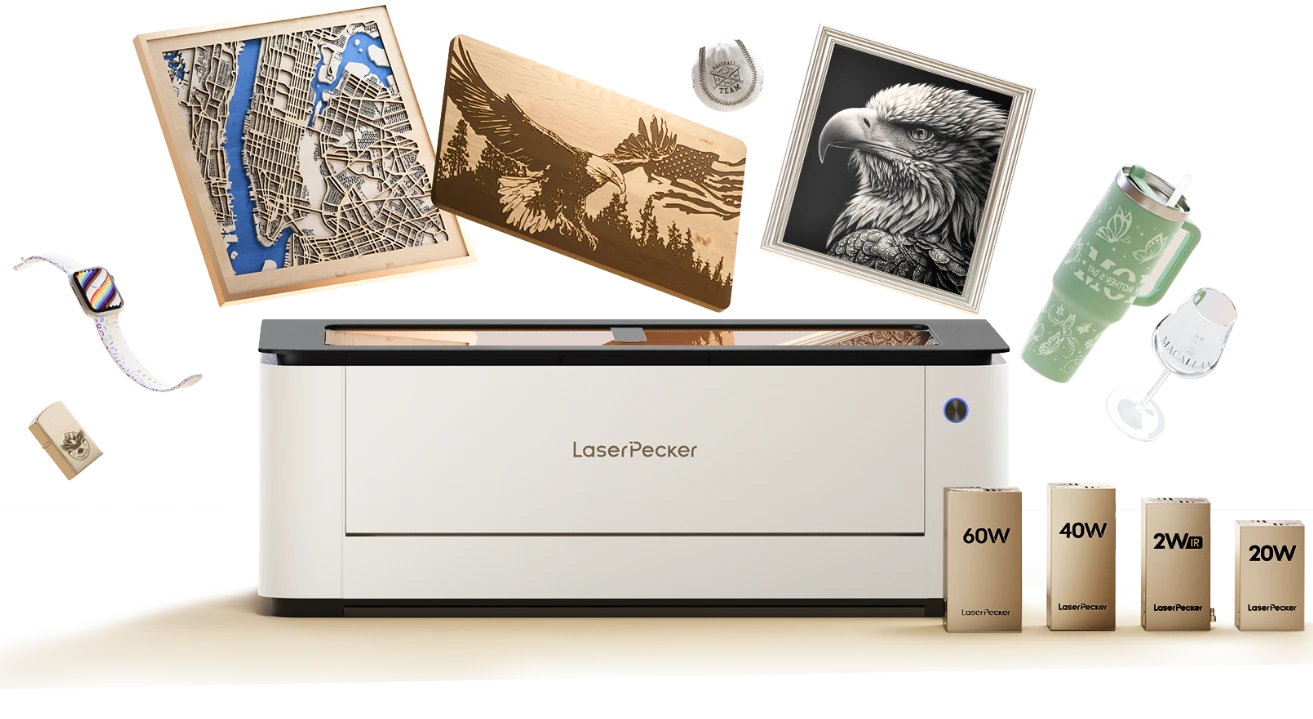
Laser leather cutting offers the most balanced solution for modern makers, especially those focused on precision, ease of use, and creative freedom. With tools like the LaserPecker LX2 and LaserPecker LP2 Plus, digital artwork can be transformed into clean leather cuts with minimal material stress or cutting errors. The ability to engrave and cut within the same workflow also makes laser systems highly versatile for customised leather products and small-scale business production.
Part 3: How to Choose the Right Leather Cutting Tool for You?
Choosing the right leather cutting tool is not simply about buying the most advanced machine. The best option depends on your workspace, production needs, design requirements, and how you prefer to work.
For Home Leather Crafters and DIY Makers
If you mainly create small leather products such as wallets, keyrings, earrings, or personalised accessories at home, flexibility and ease of use are often more important than industrial cutting power.
Compact laser cutters such as the LaserPecker LX2 allow beginners and hobby makers to experiment with shapes, test new ideas quickly, and achieve professional-looking results without years of leatherworking experience. Because the process is digitally controlled, it is also much easier to reproduce clean cuts and detailed patterns consistently.
For UK home users, workspace safety is another important factor. The LaserPecker LX2 features Class 1 Laser Safety protection, making it more suitable for indoor workshops and home crafting environments. When paired with the LaserPecker Desktop Smoke Purifier, it can also help filter smoke, fumes, and odours generated during leather engraving and cutting, improving comfort and indoor air quality during use.
For Leather Designers and Pattern Makers
Leather designers and pattern makers often require tools that maintain accurate proportions while allowing fast design adjustments and repeatable production.
Laser cutting systems make it easy to resize, duplicate, or refine digital patterns without redrawing them manually. This is especially useful when preparing seasonal collections, testing prototypes, or producing customised products for clients.
Machines such as the LaserPecker LX2 and LaserPecker LP2 Plus fit this workflow particularly well. Their high-precision laser systems and camera-assisted alignment help deliver clean, repeatable cuts even on highly detailed leather designs.
In addition to cutting, these machines can also engrave decorative textures, branding details, and positioning marks directly onto the leather surface. This helps simplify the creative workflow while reducing manual corrections and production errors.
For designers who prioritise both precision and flexibility, laser cutting and engraving create a more efficient production process from concept to finished product.
The LaserPecker LP2 Plus can also achieve Class 1 Laser Safety when used together with the LaserPecker Standard Enclosure. Combined with the LaserPecker Desktop Smoke Purifier, it provides a cleaner and safer indoor working environment by helping remove fumes and odours generated during laser processing.
For Small Leather Businesses and Custom Leather Workshops
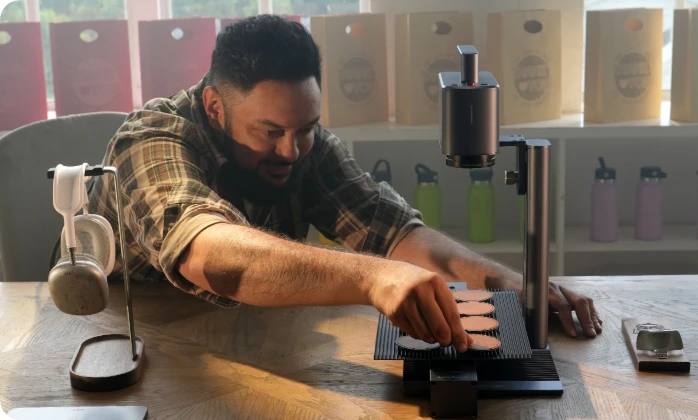
For small leather businesses, consistency and efficiency are often more important than purely manual craftsmanship. Laser cutting systems allow workshops to produce leather products in batches while maintaining consistent quality across every piece.
At the same time, businesses can still personalise products with engraved names, logos, or decorative patterns without significantly slowing production speed. This combination of efficiency and customisation is difficult to achieve with traditional hand tools alone.
Compact laser systems are especially useful for small UK workshops where workspace is limited but product variety is high. Machines that combine cutting and engraving functions can help reduce equipment costs while improving workflow efficiency.
For High-Volume or Industrial Leather Production
Large-scale leather manufacturers typically prioritise production speed, operational stability, and continuous output. In these cases, CNC leather cutting systems are often the preferred solution.
Industrial CNC systems are designed for high-volume manufacturing and can efficiently process thick leather materials over extended production periods. However, they generally require more installation space, higher investment costs, and dedicated technical operation.
Compared with laser systems, industrial CNC cutters focus more on large-scale efficiency than creative flexibility or rapid design customisation.
Part 4: Common Leather Cutting Mistakes to Avoid
Even with high-quality leather cutting tools, mistakes can still affect cutting accuracy, material quality, and overall finishing results. Understanding these common leather cutting issues can help reduce wasted material and improve consistency, especially for beginners and small workshop users.
Mistake 1: Cutting Without Testing Settings
Different leather materials react differently to cutting tools. Thickness, density, coating, and moisture levels can all affect the final result.
Before starting a full project, always test your cutting settings on a spare leather piece first. This is particularly important when using laser cutting machines, as incorrect power or speed settings may cause burn marks, incomplete cuts, or excessive edge darkening.
Testing first helps improve cutting precision while reducing unnecessary material waste.
Mistake 2: Applying Uneven Pressure
When using manual leather knives or rotary cutters, uneven hand pressure often leads to rough edges, inconsistent cut depth, or slipping along the cutting line.
To improve cutting quality:
- Secure the leather firmly before cutting
- Use a stable cutting mat
- Maintain smooth and controlled hand movement
- Avoid forcing the blade through thick leather in one pass
For thicker leather materials, several lighter cutting passes usually produce cleaner results than applying excessive pressure at once.
Mistake 3: Ignoring Leather Grain Direction
Leather grain direction plays an important role in cutting accuracy and edge quality. Cutting against the natural grain may cause stretching, uneven edges, or surface distortion, particularly with softer leather types.
Before cutting:
- Check the leather grain orientation
- Align patterns consistently
- Test curved cuts on scrap material first
This becomes especially important when producing symmetrical patterns, detailed decorative work, or repeat production pieces.
Mistake 4: Not Securing the Leather Properly
If leather shifts during cutting, even slightly, it can affect pattern alignment and reduce overall accuracy.
Manual cutting tools may create uneven edges when the material moves, while digital cutting systems can lose positioning accuracy if the leather surface is not properly secured.
To minimise movement:
- Use clamps, guides, or vacuum beds when possible
- Keep the working surface flat and clean
- Avoid overly curled or folded leather sheets
For laser cutting users in compact UK workshops, stable positioning is especially important for achieving clean, repeatable results on detailed leather projects.
Part 5: FAQs About Leather Cutting Tools
Q1. What Are the Best Leather Cutting Tools for Small Businesses?
For small leather businesses, laser cutters are often the preferred choice because they combine precision, repeatability, and customisation in one workflow.
A laser cutter such as the LaserPecker LX2 allows makers to produce detailed cuts, personalised engravings, and consistent batch production without applying mechanical pressure to the leather surface. This makes it suitable for both creative studios and small workshop production in the UK.
Q2. Can Laser Cutting Damage Leather?
Not usually, provided the machine settings are configured correctly. However, excessive laser power or slow cutting speeds may cause dark edges, scorch marks, or overheating.
Testing settings on a spare leather piece before full production helps achieve cleaner cuts and reduces material waste.
Proper ventilation is also important when using a laser cutter indoors, especially in home workshops or compact studio environments.
Q3. How Do You Finish Leather Edges After Cutting?
The finishing method depends on the cutting tool used.
If you used a laser cutter:
Laser cutting naturally seals many leather edges during processing, creating a smoother finish with less fraying. For a more refined appearance, you can lightly sand the edges or apply a leather conditioner or burnishing tool.
If you used manual knives or rotary cutters:
Hand-cut edges may require additional finishing. Sanding, beveling, and burnishing help smooth rough edges and improve durability.
Proper edge finishing gives leather products a more professional appearance regardless of the cutting method.
Q4. Should Leather Be Cut Wet or Dry?
This depends on the type of leather cutting tool being used.
For laser cutters:
Leather should always be cut dry. Moisture can interfere with laser performance, create uneven cutting results, and increase smoke generation.
For manual knives or rotary cutters:
Slightly damp leather may sometimes be easier to cut, particularly when working with thick or stiff materials. However, excessive moisture can stretch or deform the leather surface.
For most projects, dry leather provides more predictable and accurate cutting results.
Q5. What Thickness of Leather Can a Laser Cutter Cut?
The cutting thickness depends on the laser power, leather type, and machine settings.
Most compact laser cutter models are suitable for thinner and medium-thickness leather commonly used in wallets, earrings, patches, and decorative accessories. Thicker leather may require multiple passes or slower cutting speeds.
Testing different settings beforehand is the best way to achieve clean results without excessive burning.
Q6. Are Laser Cutters Safe for Indoor Leather Workshops?
Modern laser cutters can be suitable for indoor workshops when used with proper safety measures.
For example, the LaserPecker LX2 features Class 1 Laser Safety protection, making it more appropriate for enclosed home or studio environments. Pairing the machine with the LaserPecker Desktop Smoke Purifier can also help filter smoke, fumes, and odours produced during leather engraving and cutting.
Good airflow and correct ventilation remain important for maintaining a safer indoor workspace.
Conclusion
Different leather cutting tools are designed for different types of projects and production needs. Manual leather knives and rotary cutters remain practical choices for simple DIY crafts and traditional leatherworking, while CNC leather cutters are more suitable for large-scale industrial manufacturing.
For creative makers, personalised product businesses, and designers producing detailed leather patterns, laser cutting machines such as the LaserPecker LP2 Plus and LX2 offer an excellent balance of precision, efficiency, and repeatable results. The ability to combine leather cutting and engraving within the same workflow also makes laser systems especially useful for customised leather goods and small-batch production.
By selecting the right leather cutting tool and understanding common cutting mistakes, you can improve cutting accuracy, reduce material waste, and achieve cleaner, more professional-looking leather projects.