





























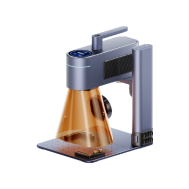


Mirrors are now used for far more than simple reflections. Across the UK, engraved mirrors have become popular for home décor, wedding signage, shop branding, and personalised interior design. Whether used in cafés, salons, retail spaces, or modern home workshops, mirror engraving adds a stylish and professional finish.
The engraving tool you choose directly affects engraving precision, surface quality, and safety. In this guide, we compare the main types of mirror engraving tools, their pros and limitations, and explain why laser engraving machines have become a preferred solution for detailed and efficient mirror engraving projects.

In this article:
- Part 1: Main Types of Mirror Engraving Tools
- Type 1: Hand Engraving Tools
- Type 2: Chemical Etching Tools
- Type 3: Laser Engraving Tools
- Part 2: Why Laser Engravers Are the Best Choice for Mirror Engraving
- FAQs: Common Questions About Mirror Engraving Tools
Part 1: Main Types of Mirror Engraving Tools
Mirror engraving can be carried out using different engraving tools and machine systems, each offering varying levels of precision, production efficiency, and creative control. Some tools rely on manual engraving techniques, while others use chemical etching equipment or advanced laser engraving technology.
Understanding the differences between mirror engraving tools can help you select the right solution for your project. Whether you are creating personalised home décor, retail signage, or detailed artistic designs, the engraving method will directly affect the final appearance and production quality.
Type 1: Hand Engraving Tools for Mirrors
Hand engraving is one of the most traditional mirror engraving methods. It uses manual tools such as rotary engravers, engraving pens, or grinding bits to etch designs directly onto the mirror surface.
The operator guides the tool by hand to create decorative lines, lettering, or artistic patterns. Small areas of the mirror coating are gradually removed to reveal the design underneath.
This method is commonly used for:
- Simple decorative projects
- Handmade artwork
- Freehand customisation
- Small DIY mirror crafts
However, engraving quality depends heavily on the user's experience and control. Achieving consistent detail on larger mirrors can be difficult, especially for beginners.
Pros
- Suitable for simple or freehand engraving
- Affordable entry-level method
- Ideal for hobby and DIY projects
Cons
- Precision depends on engraving skill
- Difficult to maintain consistent detail
- Thin mirrors may crack or chip
- Time-consuming for detailed artwork
Type 2: Chemical Etching Tools for Mirrors
Chemical etching creates decorative mirror designs using etching cream or specialised acids. Instead of physically engraving the glass, the chemical reacts with the surface to produce a frosted appearance.
A stencil or masking film is normally applied before the etching process begins. The exposed areas react with the chemical solution, while protected sections remain untouched. After cleaning the surface, the frosted pattern becomes visible.
This technique is often chosen for:
- Decorative bathroom mirrors
- Frosted signage
- Simple logo applications
- Repetitive stencil-based designs
Because there is no direct mechanical pressure on the glass, chemical etching can reduce the risk of surface damage.
Pros
- Creates smooth frosted finishes
- No physical pressure on the mirror
- Suitable for repeated stencil designs
Cons
- Less detailed than laser engraving
- Chemicals require careful handling
- Limited flexibility for customised artwork
Type 3: Laser Engraving Tools for Mirrors
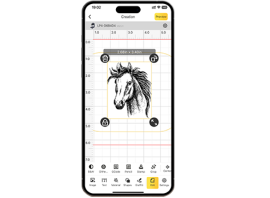
Laser engraving machines for mirrors provide a highly precise and modern solution for mirror engraving. A focused laser beam removes parts of the mirror backing layer to create detailed patterns, text, or images.
Because the engraving process is digitally controlled, laser engravers can produce highly consistent results with excellent accuracy. This makes them ideal for:
- Personalised mirrors
- Interior décor projects
- Business signage
- Wedding displays
- Custom gift products
For users in the UK, compact laser engravers are especially popular in home workshops and small creative businesses because they support detailed engraving while saving workspace.
Many modern laser engravers also support safer indoor operation when paired with protective covers or smoke purification systems.
Pros
- Excellent precision for text, logos, and fine details
- Supports complex and customised designs
- Non-contact engraving reduces cracking risk
- Consistent computer-controlled results
- Suitable for both small and large-scale projects
Cons
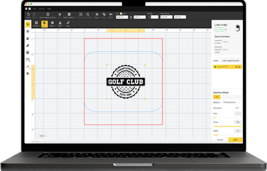
- Requires basic design software knowledge
- Initial setup cost is higher than manual tools
Comparison of Mirror Engraving Tools
| Machine Type | Precision | Detail Quality | Maintenance | Batch Production |
|---|---|---|---|---|
| Hand Engraving Tools | Low–Medium | Simple designs and freehand patterns | Low | Low |
| Chemical Etching Tools | Medium | Smooth frosted stencil designs | Medium | Medium |
| Laser Engraving Tools | Very High | Fine details, logos, text, and complex graphics | Medium | High |
Part 2: Why Laser Engravers Are the Best Choice for Mirror Engraving?
Reason 1: Superior Precision and Fine Detail
Hand engraving depends heavily on the operator's technique and consistency. Although skilled engravers can create attractive artwork, reproducing identical results across multiple mirrors is often difficult.
Chemical etching produces smooth frosted finishes, but achieving intricate details usually requires carefully prepared stencils and additional setup time.
Laser engraving machines use digital design software to control every engraving path with high accuracy. This allows detailed text, logos, geometric patterns, and artwork to be reproduced consistently on every project.
For personalised mirrors, retail displays, and decorative interior pieces, laser engraving delivers significantly cleaner and sharper results than traditional methods.
Result: Laser engraving offers the highest level of precision and engraving consistency.
Reason 2: Faster Workflow and Better Efficiency
Traditional hand engraving is slow because each design must be completed manually. Detailed projects require patience, steady control, and long working hours.
Chemical etching can handle multiple pieces simultaneously, but the process still involves several preparation stages:
- Applying masking films
- Positioning stencils
- Using etching chemicals
- Cleaning the mirror afterwards
Laser engraving simplifies the entire workflow. Once the digital file and machine settings are prepared, the engraving process becomes fast, repeatable, and highly efficient.
This makes laser engravers ideal for:
- One-off personalised gifts
- Wedding signage
- Small business production
- Batch engraving projects
For UK-based home workshops and creative studios, compact laser engravers are especially useful because they save space while maintaining professional engraving quality.
Result: Laser engraving provides excellent efficiency for both custom and batch production.
Reason 3: Reduced Risk of Mirror Damage
Hand engraving tools apply direct pressure to the mirror surface, which can increase the risk of scratches, chips, or cracks—particularly on thinner mirrors.
Chemical etching avoids mechanical contact, but incorrect chemical handling or uneven masking may still damage the mirror backing layer.
Laser engraving is a non-contact process. The laser removes only selected areas of the coating layer without physically touching the glass itself. When correct engraving settings are used, the risk of damaging the mirror is greatly reduced.
This makes laser engraving especially suitable for:
- Decorative mirrors
- Coated mirrors
- Fragile glass surfaces
- Precision commercial applications
Result: Laser engraving is one of the safest and most reliable methods for preserving mirror quality.
Recommended Mirror Engraving Machines: LaserPecker LP2 Plus and LP4
For creators looking for reliable and professional mirror engraving results, portable laser engravers offer an excellent balance of precision, efficiency, and ease of use. Two popular choices are the LaserPecker LP2 Plus and LaserPecker LP4.
Both engraving machines are compact enough for home workshops and small studios while still delivering highly detailed engraving performance.
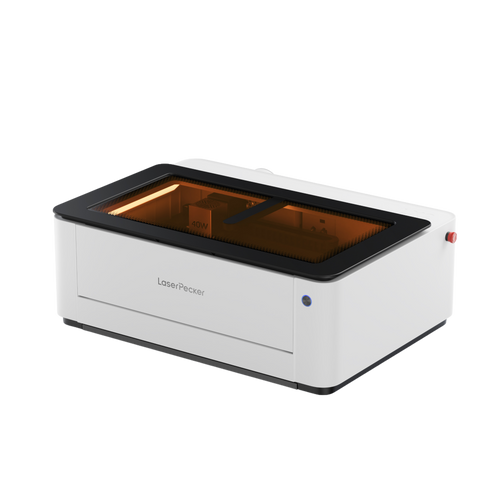
LaserPecker LP2 Plus is a compact yet powerful diode laser engraver designed for personalised engraving projects, mirror decoration, and small business production.
-
High engraving speed:
Supports engraving speeds of up to 4,000 mm/s for faster project completion. -
10W diode laser module:
Produces sharp and high-contrast engraving results on a wide range of materials. -
High-detail engraving:
The fine laser spot allows accurate engraving of logos, lettering, and decorative graphics. -
Portable and space-saving design:
Suitable for workshops, craft studios, and home-based creative setups. -
Enhanced indoor safety:
When combined with the LaserPecker Standard Enclosure, the machine achieves Class 1 Laser Safety, making it more suitable for safer indoor operation. -
Cleaner engraving environment:
The LP2 Plus can also be paired with the LaserPecker Desktop Smoke Purifier to help filter smoke, odours, and airborne particles generated during engraving and cutting.
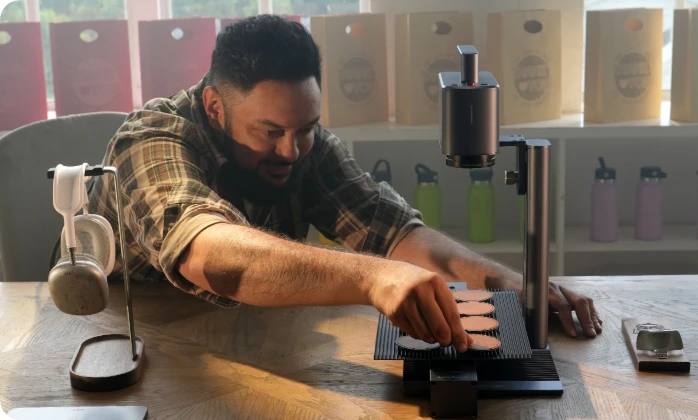
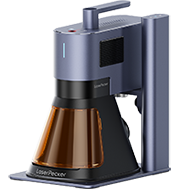
LaserPecker LP4 is a more advanced dual-laser engraving system designed for creators who require wider material compatibility and professional-level engraving quality.
-
Dual-laser technology:
Combines a 10W diode laser with a 2W infrared laser for engraving coated mirrors, glass-related applications, metal, wood, leather, and acrylic. -
High-resolution engraving:
Supports highly detailed graphics, fine text, and precision artwork. -
Versatile material support:
Suitable for decorative engraving, customised products, signage, and creative business applications. -
Compact professional setup:
Ideal for UK hobbyists, Etsy sellers, and small creative businesses needing professional results in limited workspace environments. -
Class 1 Laser Safety support:
When paired with the LaserPecker Standard Enclosure, the LP4 supports Class 1 Laser Safety for improved indoor operational safety.
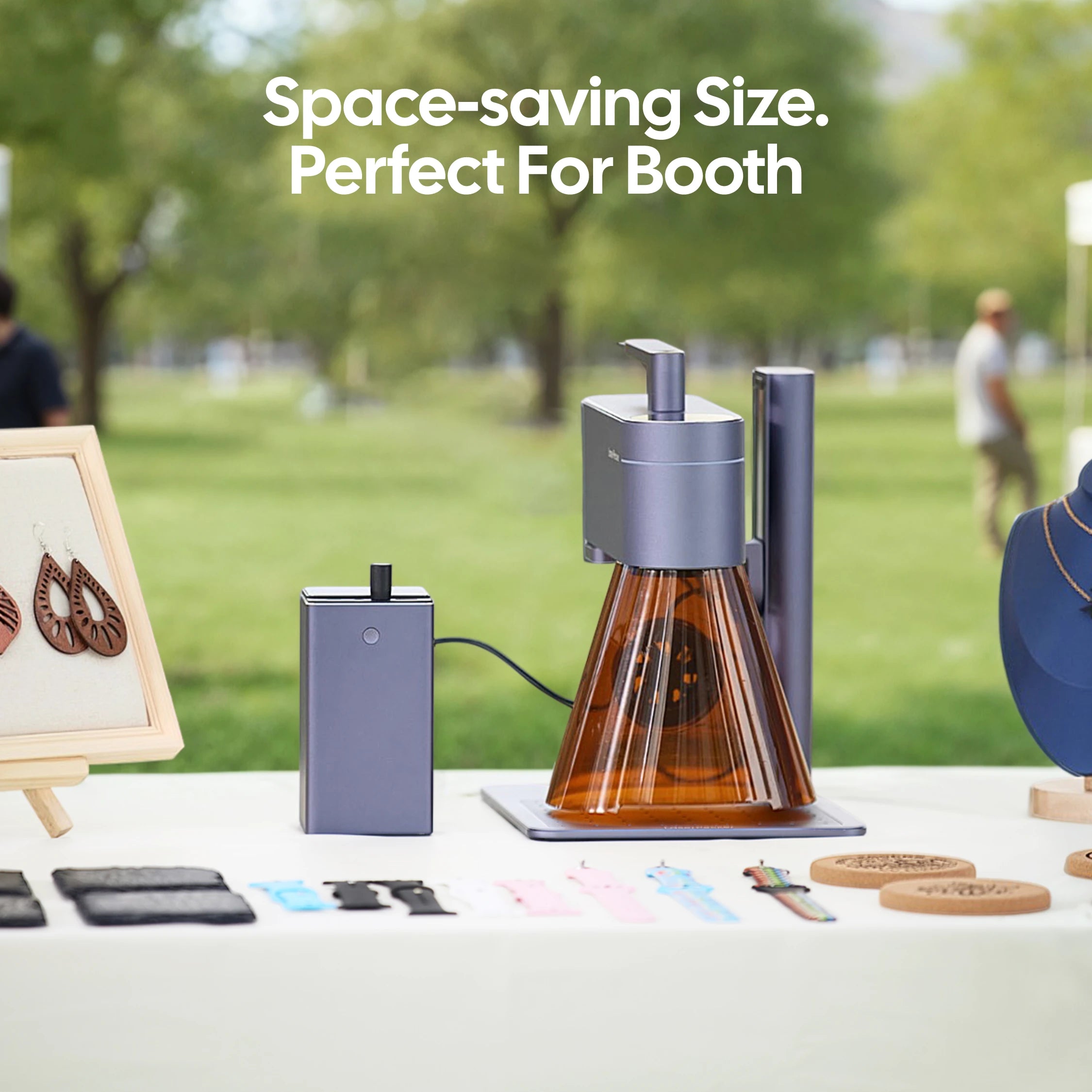
Whether you are creating personalised mirrors, decorative wall pieces, retail signage, or customised gifts, laser engraving machines such as the LP2 Plus and LP4 provide the precision, consistency, and workflow efficiency needed for modern mirror engraving projects.
Conclusion
Mirror engraving has developed far beyond traditional crafting methods. Although hand engraving and chemical etching still offer artistic flexibility, they often struggle to match the precision, efficiency, and consistency of modern laser engraving machines.
For UK hobbyists, creative studios, and small businesses, laser engraving provides a faster and more reliable way to create personalised mirrors, decorative signage, and detailed custom designs. Its non-contact engraving process also helps reduce the risk of damaging delicate mirror surfaces.