





























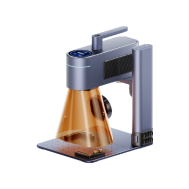


Customising tumblers has become increasingly popular across the UK, whether for personalised gifts, branded merchandise, or small business products. However, achieving clean and consistent engraving on curved surfaces can be challenging. Common issues include shallow marks, uneven designs, and difficulty handling different tumbler materials.
Choosing the right laser engraving machine is essential to avoid these problems. In this guide, we'll explore the best tumbler laser engraving machines for 2026, explain the main laser types available, and share practical tips to help you achieve professional-quality results.

In this article:
- Part 1: Four Types of Laser Engraving Machines for Tumblers
- Type 1: Diode Laser Engraving Machine
- Type 2: IR Laser Engraving Machine
- Type 3: Fibre Laser Engraving Machine
- Type 4: CO2 Laser Engraving Machine
- Part 2: How to Choose the Right Tumbler Laser Engraving Machine
- Part 3: Top Tips for Perfect Tumbler Engraving
- Part 4: FAQs about Tumbler Laser Engraving Machine
Part 1: Four Types of Laser Engraving Machines for Tumblers
Type 1: Diode Laser Engraving Machine
Diode lasers are well suited for tumblers with coatings or painted finishes. They perform particularly well when engraving logos, text, and patterns on surfaces such as painted metals or anodised aluminium. Most diode lasers operate at a 450 nm blue wavelength, which interacts effectively with coated or anodised layers to produce high-contrast surface marks.
However, diode lasers are not designed for deep engraving on bare metal. They are primarily used for surface marking rather than material removal.
Recommended Product: LaserPecker LP2 Plus
- Fast engraving performance: Up to 4,000 mm/s, around six times faster than the original LP2—ideal for batch production and custom orders
- 10W 450 nm diode laser: Optimised for coated tumblers, painted metals, and anodised aluminium, delivering crisp logos and detailed graphics
- SpinTrack™ module support: Works with a rotary attachment for smooth, seamless engraving around the full circumference
- Dual red-dot focusing system: Enables quick and accurate setup, even for beginners
- Wide material compatibility: Supports over 100 materials, including coated metals, wood, leather, acrylic, and plastics
- Portable, multi-angle design: Flexible positioning for different workspace setups
- Expandable ecosystem: Compatible with rotary tools, slide extensions, enclosures, and air purification systems
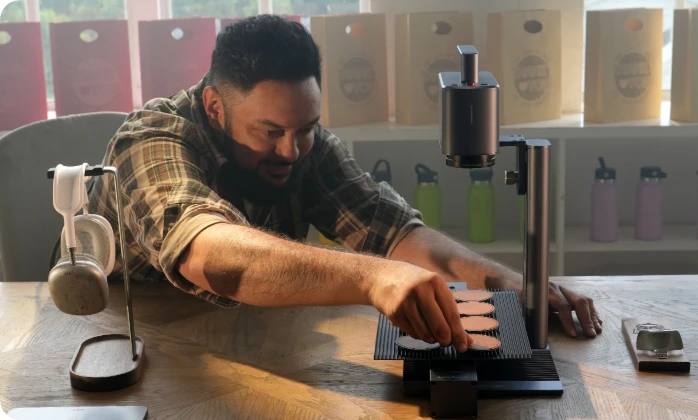
This type of machine is ideal for makers focused on coated tumblers and surface engraving. For frequent deep engraving on stainless steel, a fibre laser is generally a better choice.
Type 2: IR Laser Engraving Machine
Infrared (IR) lasers can engrave both coated and uncoated tumblers. Typically operating at a 1064 nm wavelength, they are widely used for marking metals, certain plastics, and coated materials.
While IR lasers can work on bare metal, the results are usually shallower with lower contrast compared to fibre lasers. This makes them less suitable for bold or deeply engraved designs. However, they excel in producing fine details and are ideal for projects that require flexibility across multiple materials.
Recommended Product: LaserPecker LP4
- Dual-laser system: Combines a 10W diode laser with a 2W IR laser, supporting over 300 materials
- Optimised diode performance: Ideal for coated tumblers, painted metals, and anodised aluminium
- Adjustable engraving angle: Allows better alignment with curved surfaces without repositioning the tumbler
- High speed and precision: Up to 4,000 mm/s with 8K resolution for detailed results
- Software compatibility: Works with LightBurn and LaserPecker Design Space
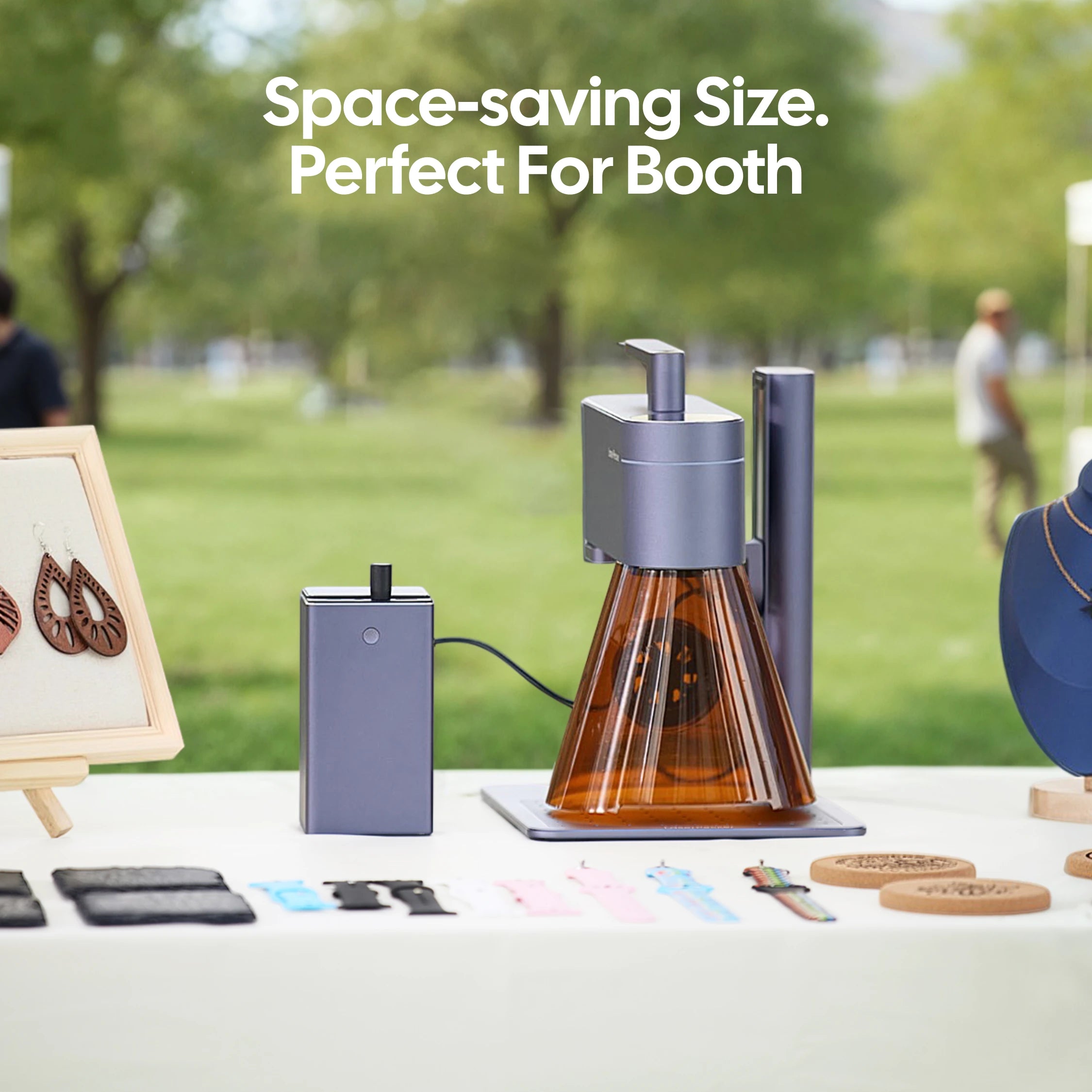
The LaserPecker LP4 offers a strong balance between versatility and detail, making it a practical option for users working with mixed materials and different tumbler finishes.
Type 3: Fibre Laser Engraving Machine
Fibre lasers are among the most powerful options for tumbler engraving. They are capable of deep engraving on both coated and uncoated metals, and can also produce colour engraving effects on certain materials.
They are particularly effective for stainless steel, aluminium, and titanium tumblers, where durability and engraving depth are important.
Recommended Product: LaserPecker LP5
- Dual-laser capability: Combines a 20W fibre laser with a 20W diode laser, allowing both surface and deep engraving on a wide range of materials
- Deep, high-contrast engraving: Ideal for stainless steel tumblers, including embossed and long-lasting markings
- High-speed production: Up to 10,000 mm/s, suitable for batch orders and commercial use
- Rotary compatibility: Enables smooth, full-wrap engraving on curved surfaces
- Compact and enclosed design: Suitable for home studios, workshops, and retail environments when used with protective enclosures
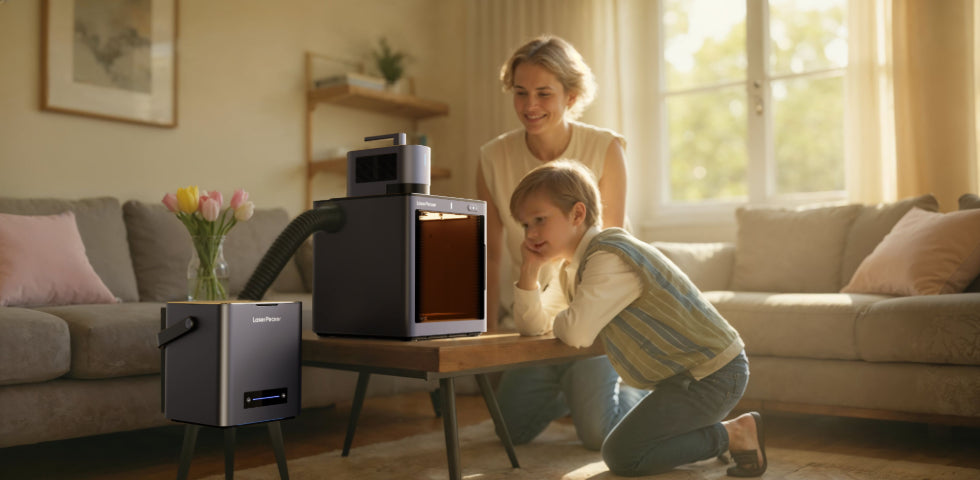
The LaserPecker LP5 is well suited for professional users who require speed, consistency, and the ability to handle both surface and deep engraving tasks. However, fibre lasers typically require a higher budget and more setup knowledge, which may not be necessary for casual users.
Type 4: CO2 Laser Engraving Machine
CO2 lasers are effective for engraving coated tumblers and non-metal materials such as plastics and acrylic. However, they are not suitable for bare metal, as the laser cannot directly mark uncoated metallic surfaces.
For tumblers with plastic shells, acrylic layers, or painted and powder-coated finishes, CO2 lasers can produce clean and visible results.
That said, for metal tumblers—especially stainless steel—diode, IR, and fibre lasers are generally more reliable and versatile options.
Comparison Table
| Laser Type | Best For | Surface Compatibility | Pros | Cons | Recommended Product |
|---|---|---|---|---|---|
| Diode Laser | Coated tumblers | Lacquered metals, anodised aluminium | Cost-effective, clear surface marking | Cannot engrave bare metal | LP2 Plus |
| IR Laser | Coated & uncoated metals | Painted or bare metals | Versatile, flexible engraving angles | Shallow results on bare metals | LP4 |
| Fibre Laser | Coated & uncoated metals | Stainless steel, titanium, aluminium | Deep engraving, colour marking | Higher cost, requires experience | LP5 |
| CO2 Laser | Coated plastic / metal | Acrylic, coated surfaces | Strong on non-metal materials | Cannot engrave bare metals | Not recommended |
When choosing a laser for tumbler engraving, it's important to consider both the material and the desired engraving effect.
- For beginners or users mainly working with coated tumblers, diode lasers such as the LaserPecker LP2 Plus offer a reliable and easy-to-use solution
- For greater flexibility across materials, the LaserPecker LP4 provides a balanced option with both diode and IR capabilities
- For professional use, high-volume production, or deep engraving on stainless steel, the LaserPecker LP5 delivers superior performance and precision
CO2 lasers remain useful for plastics and coated surfaces, but are not the ideal choice for metal tumblers. Selecting the right machine will improve engraving quality, efficiency, and long-term consistency.
Part 2: How to Choose the Right Tumbler Laser Engraving Machine?
When choosing a laser engraver for tumblers, it is important to consider your production goals, material types, and the level of engraving detail required. For UK creators, personalised gift businesses, and home-based engraving workshops, selecting the right machine can significantly improve both engraving quality and production efficiency.
Here are some key factors to consider before choosing a tumbler laser engraving machine:
- Tumbler Material: Is the tumbler powder-coated, stainless steel, bare metal, or finished with a specialised coating? Different laser technologies interact differently with various materials.
- Engraving Detail: Do you require fine text, intricate logos, or high-contrast artwork? Precision requirements will influence the type of laser best suited to your needs.
- Production Volume: Are you creating personalised one-off tumblers or handling bulk customer orders?
- Rotary Attachment and Angle Support: Curved tumbler surfaces often require rotary engraving support and flexible positioning capability.
- Budget: Diode laser systems are generally more affordable, while fibre laser machines offer faster speed and deeper metal engraving performance.
The type of laser technology used has a direct impact on engraving quality, material compatibility, and workflow efficiency. For example:
- Fibre lasers are ideal for deep engraving and high-contrast marking on stainless steel and titanium tumblers.
- Diode lasers are commonly used for coated tumblers and entry-level personalised engraving projects.
Quick Recommendations Based on Different Use Cases
For Hobbyists and Beginners: LaserPecker LP2 Plus
The LaserPecker LP2 Plus is a compact and cost-effective solution for beginners, hobbyists, and small personalised gift businesses in the UK. It performs particularly well on coated tumblers and supports detailed engraving for names, logos, and decorative designs.
When paired with the LaserPecker Standard Enclosure, the machine achieves Class 1 Laser Safety, making it more suitable for indoor creative environments and home workshops. Users can also combine it with the LaserPecker Desktop Smoke Purifier to help filter smoke, fumes, and odours generated during engraving, improving indoor air quality and workspace comfort.
For Versatility Across Multiple Materials: LaserPecker LP4
The LaserPecker LP4 combines diode and infrared laser technology, allowing it to engrave both coated and bare metal tumblers. This makes it an excellent option for UK small businesses and creators who work with multiple tumbler materials and personalised product styles.
With the addition of the LaserPecker Standard Enclosure, the LP4 supports Class 1 Laser Safety protection for safer indoor operation. It can also be used with the LaserPecker Desktop Smoke Purifier, which helps reduce airborne particles, smoke, and engraving odours during production.
For Professional and High-Volume Production: LaserPecker LP5
The LaserPecker LP5 is designed for professional engraving businesses and high-volume production environments. It is particularly suitable for stainless steel and titanium tumblers, delivering deep engraving, strong contrast, and fast production speed.
For UK workshops focused on commercial tumbler engraving, the LP5 offers excellent production efficiency and engraving consistency. When used together with the LaserPecker LP5 Safety Enclosure, the system achieves Class 1 Laser Safety protection. The machine can also be paired with the LaserPecker Desktop Smoke Purifier to help maintain cleaner indoor air by filtering fumes and engraving odours generated during operation.
Choosing the right tumbler laser engraving machine ultimately depends on balancing engraving quality, material compatibility, workspace requirements, and production scale.
Part 3: Top Tips for Perfect Tumbler Engraving
Achieving clean and consistent results on a tumbler requires more than simply starting the machine. It involves proper preparation, precise setup, and adjusting your settings based on the material and shape of the tumbler.
Use a Rotary Attachment for Consistent Results
For cylindrical objects like tumblers, a rotary attachment is essential. It rotates the tumbler during engraving, ensuring designs remain straight, evenly spaced, and properly aligned around the surface.
Optimise Laser Power and Speed Settings
Different materials require different settings.
- Too much power may damage coatings or cause burn marks
- Too little power can result in faint or incomplete engravings
Running small test engravings helps you find the right balance between power and speed before starting the final job.
Ensure Accurate Focus for Sharp Detail
Precise focus is critical for achieving sharp and detailed engravings. With curved surfaces, even slight misalignment can affect quality.
- Adjust the laser angle where possible
- Use alignment tools or built-in focusing systems
- Machines such as the LaserPecker LP4 and LaserPecker LP5 offer features that simplify accurate positioning
Adjust Settings for Coated vs Uncoated Tumblers
Material type has a direct impact on engraving results:
- Coated tumblers: Typically require lower power to avoid damaging the surface finish
- Uncoated metal tumblers: May require multiple passes, especially when using fibre or IR lasers, to achieve darker and more defined results
Always Test Before Final Engraving
Before engraving the full design, run a test on a small, less visible area. This allows you to:
- Verify power and speed settings
- Check alignment and positioning
- Preview the final engraving quality
Taking this extra step helps reduce errors and ensures a more professional result.
Part 4: FAQs about Tumbler Laser Engraving Machine
Q1. What Laser Is Best for Tumblers?
The best laser depends on the tumbler material and the level of engraving depth required.
- Coated or painted tumblers: A diode laser such as the LaserPecker LP2 Plus is ideal for clean surface marking without damaging the finish
- Bare metal tumblers: An IR laser like the LaserPecker LP4 can be used, though results may be lighter
- Stainless steel or titanium tumblers: A fibre laser such as the LaserPecker LP5 delivers deep, high-contrast engravings that are long-lasting
Selecting the appropriate laser ensures accurate, durable, and professional-looking results.
Q2. Can You Engrave a Yeti Yourself?
Yes, you can engrave a Yeti or similar stainless steel tumbler at home using a desktop laser engraver such as the LaserPecker LP4 or LaserPecker LP5.
For best results:
- Use a rotary attachment to keep the design aligned
- Ensure accurate focus before engraving
- Clean the tumbler surface to remove oils or dust
- Run test engravings to fine-tune your settings
With proper setup, even beginners can achieve professional-quality results.
Q3. Can Diode Lasers Engrave Metal Tumblers?
Diode lasers are well suited for coated or painted metal tumblers. They can produce clean and precise surface engravings, making them ideal for logos, text, and decorative patterns.
However, they are not effective for bare metal. Engraving results on uncoated metal are usually shallow and may fade over time. For deeper and more permanent results, IR or fibre lasers are recommended.
Despite this limitation, diode lasers remain a popular choice for hobbyists and small businesses due to their affordability and ease of use.
Q4. How Long Does It Take to Engrave a Tumbler?
Engraving time depends on several factors, including tumbler size, material, and design complexity.
- A standard tumbler typically takes 5–15 minutes when using machines like the LaserPecker LP4 or LaserPecker LP5 with a rotary attachment
- More complex designs, deeper engraving, or multiple passes will increase processing time
- Setup tasks—such as alignment, focusing, and testing—may add additional minutes
Proper preparation helps maximise efficiency while maintaining high-quality results.
Q5. What Settings Should I Use for Tumbler Engraving?
There is no single setting that works for every project, as it depends on the material and laser type.
- Start with moderate power and speed settings
- Adjust based on engraving depth and contrast
- Use lower power for coated surfaces to prevent damage
- Increase passes rather than power when working with metal
Testing on a sample area is always recommended before final engraving.
Q6. Do I Need a Rotary Attachment for Tumblers?
Yes, a rotary attachment is highly recommended for engraving tumblers. Since tumblers are cylindrical, the rotary tool ensures:
- Even rotation during engraving
- Straight and properly aligned designs
- Consistent depth across the entire surface
Without a rotary attachment, achieving professional results on curved surfaces is significantly more difficult.
Conclusion
Choosing the right laser engraver for tumblers can significantly improve both efficiency and engraving quality. Diode lasers, such as the LaserPecker LP2 Plus, are ideal for coated surfaces, while IR lasers like the LaserPecker LP4 offer a balanced solution for precision and versatility. For bare metals and high-volume production, fibre lasers such as the LaserPecker LP5 deliver the best performance.
Modern engraving machines also come equipped with advanced features, including rotary attachments for curved surfaces, multi-angle engraving, and high-resolution output. These capabilities make it easier to produce consistent logos, text, and detailed designs with professional results.
Whether you're a hobbyist, running a small business, or managing large-scale production, choosing a machine like the LaserPecker LP2 Plus, LP4, or LP5 ensures reliable performance, durable engravings, and consistently high-quality results.