
































Wood engraving is a fantastic way to bring your ideas to life through texture, clean lines, and creative designs. The tools you choose will directly shape the final result—whether you're creating signs, artwork, or home décor. By understanding the different types of engraving tools and what they're best suited for, you can produce pieces that look polished and professional, regardless of your experience level.
In this guide, we'll explore four types of wood engraving tools, what each is best used for, and how to choose the right option for your next project whether you're a hobbyist or setting up a small workshop in the UK.

In this article:
- Part 1: Common Use Cases for Wood Engraving Tools
- Part 2: Four Types of Engraving Wood Tools
- Type 1:Wood Laser Engravers
- Type 2: Hand Tools
- Type 3: Electric or Power Wood Engraving Tools
- Type 4: CNC Wood Routers
- Part 3: How to Pick the Tools for Wood Engraving?
- Part 4: FAQs about Wood Engraving Tools
Part 1: Common Use Cases for Wood Engraving Tools
Before exploring the different types of wood engraving tools, it's helpful to understand what you can create with them. In the UK, these tools are widely used by hobbyists, small business owners, and craft makers for a variety of practical and creative projects:
- Personalised signs with names, quotes, or custom graphics
- Home décor and gifts, such as wall art, engraved chopping boards, or coasters
- Detailed artwork featuring textures, patterns, and fine lines
- Furniture customisation, including decorative accents or restorations
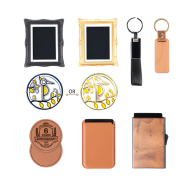
- Branding wooden products, such as engraving logos for small businesses or Etsy shops
- Design models and prototypes for creative or architectural projects
Each of these applications may require a slightly different tool, depending on the level of detail, speed, and consistency needed. For users in the UK, compact and easy-to-use tools are especially popular for home workshops where space and ventilation may be limited.
Part 2: Four Types of Engraving Wood Tools
There are four main types of tools used for engraving wood: wood laser engravers, hand tools, power tools, and CNC routers. Each option offers a different balance of control, speed, and finish quality, depending on the project requirements and the user's experience level.
Type 1: Wood Laser Engravers
Laser engraving is one of the most precise and efficient methods for working with wood. It uses a focused beam of light to burn, cut, or vaporise the surface, producing highly detailed and repeatable designs. The process is digitally controlled, making it ideal for both beginners and professionals.
Key advantages:
- Exceptional accuracy, ideal for intricate artwork and fine detailing
- Fast processing speeds, suitable for both small custom pieces and batch production
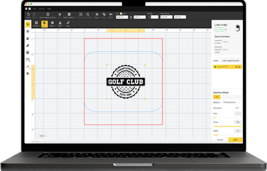
- Digital workflow, allowing seamless use of design files
- Low maintenance, as there is minimal physical tool wear
- Cleaner working environment, with less debris compared to manual carving
For users in the UK, compact laser engravers are especially popular in home workshops, where space is limited and clean operation is important. When paired with proper ventilation or an air purifier, they are well-suited for indoor use.
The LaserPecker LP2 Plus CleanAir Bundle combines high-speed engraving performance with a compact, portable design and an enclosure for cleaner indoor use. Featuring a powerful 10W diode laser, it delivers deeper cuts and precise engraving across a wide range of materials, making it suitable for both creative projects and small-scale production.
For woodworking and craft applications, it offers:
- High-speed engraving: Up to 4,000 mm/s, allowing faster completion of detailed designs
- Precise results: 10W diode laser enables deeper cuts and fine-detail engraving
- Wide material compatibility: Works with wood, leather, acrylic, coated metal, and more
- Portable design: Multi-angle flexibility adapts to different workspace setups
- Dual red-dot focus: Quick alignment for improved accuracy and efficiency
- Cylindrical engraving support: Compatible with SpinTrack™ for bottles, tumblers, and long objects
- Cleaner indoor operation: Enclosure plus air purification helps reduce smoke and residue

For users in the UK, the LP2 Plus CleanAir Bundle is especially suitable for home workshops and small online businesses producing personalised items. The combination of portability, speed, and cleaner operation makes it a practical option for indoor creative environments.
Overall, the LP2 Plus CleanAir Bundle is ideal for users looking for portability, versatility, and efficient small-scale production — whether for DIY projects, personalised gifts, or commercial work.
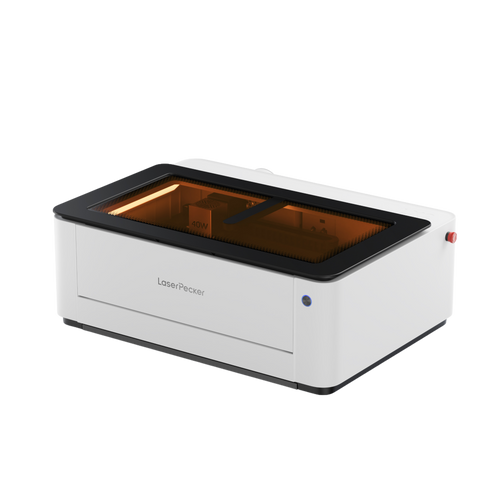
The LaserPecker LX2 – For Large-Scale and Professional Projects
The LaserPecker LX2 is designed for users who require a larger working area and consistent performance for demanding applications.
The LaserPecker LX2 is designed for users who require a larger working area and consistent performance for demanding applications. Its modular laser options and enclosed design make it suitable for workshops, studios, and professional production environments.
Key features:
- Adjustable laser power: Options ranging from 20W to 60W diode lasers, plus a 2W IR module for different materials and engraving depths
- High-precision alignment: Built-in camera with precise positioning for patterns, logos, and text
- Expanded working area: 500 mm × 305 mm workspace, suitable for larger wooden panels, signage, and irregular shapes
- Rotary compatibility: Can be paired with the LaserPecker Rotary Extension for engraving cylindrical or curved surfaces
- Class 1 laser safety: Designed for safer operation in professional and indoor workshop environments
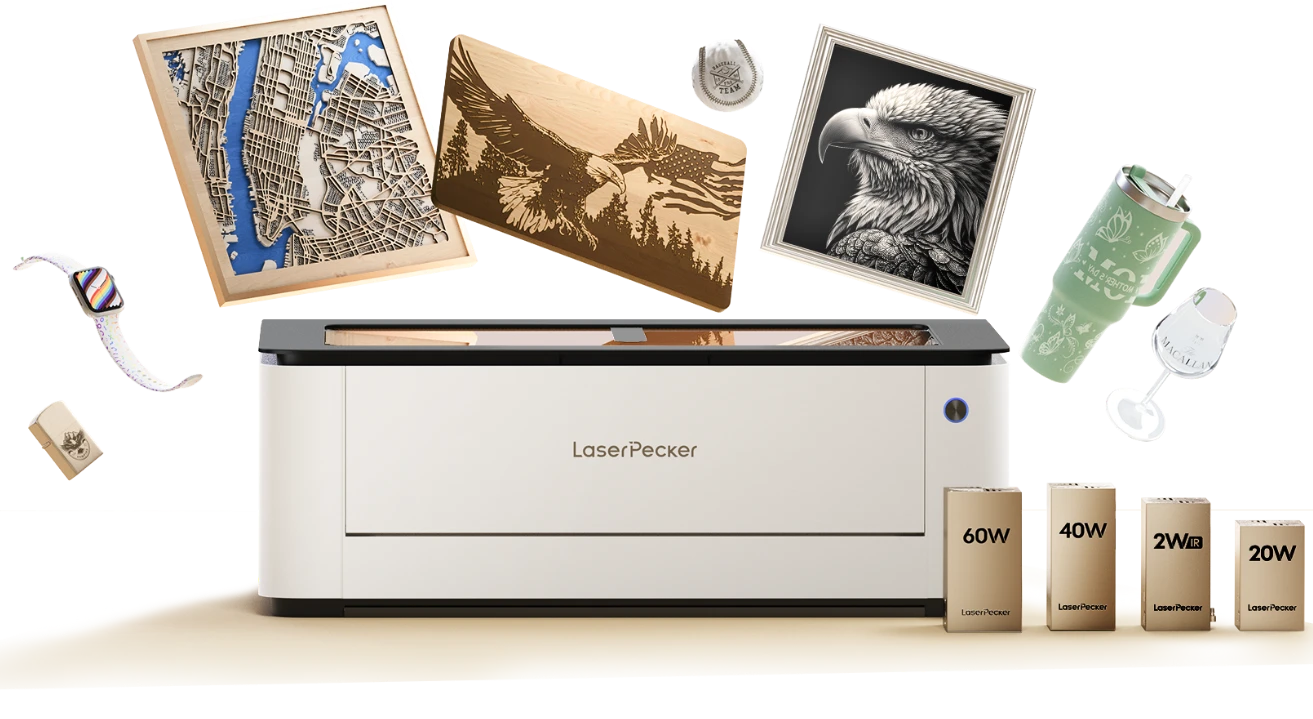
For users in the UK, the LX2 is well suited to maker spaces, professional studios, and small businesses producing signage, customised wooden items, or decorative products at scale. Its larger working area and modular laser setup support efficient batch production while maintaining consistent quality.
Type 2: Hand Tools
Hand tools are essential for traditional wood engraving. They offer unmatched tactile control, allowing users to feel the material and refine every cut manually—making them a preferred choice for artisans and restoration work.
Common Hand Tools
Chisels
Chisels feature a straight, flat edge designed for removing wood and creating clean lines. They can be used with a mallet for heavier cuts or by hand for finer detailing. High-quality chisels maintain sharpness and provide excellent control.

Gouges
Gouges have curved blades that are ideal for carving smooth contours and textures. Different curvature levels allow for varied depth and shaping, making them essential for relief carving and sculptural work.

Veiners
Veiners are narrow, U-shaped tools used for fine detailing. They are particularly effective for adding textures such as leaf veins, feather lines, and decorative patterns, often during the final stages of carving.

Comparison Table: Common Wood Engraving Hand Tools
| Product Type | Blade Shape & Edge | Features | Best Use Scenarios |
|---|---|---|---|
| Chisel | Straight, flat edge | Sharp, durable, clean cuts | Joinery, lettering, detailing |
| Gouge | Curved or U-shaped | Removes larger material volumes | Relief carving, shaping |
| Veiner | Narrow, deep U-shape | High precision for fine textures | Ornamental and pattern carving |
When to Pick Hand Tools
Hand tools are ideal if you value craftsmanship, precision, and a slower, more controlled workflow. They are widely used by artists, restorers, and traditional woodworkers across the UK.
Type 3: Electric or Power Wood Engraving Tools
Power tools combine the control of hand tools with the efficiency of motorised operation. They are suitable for users who want to speed up their workflow or work with harder wood types more easily.
Common Power Tools
Power Chisels
Motor-driven chisels replicate manual carving motions at high speed, allowing for efficient shaping while maintaining control. They are especially useful for hardwoods and extended carving sessions.

Power Routers
Routers use rotating bits to cut, shape, and groove wood. With adjustable depth settings and interchangeable bits, they are suitable for edging, lettering, and decorative inlays.
Rotary Tool Kits
Rotary tools are compact, multi-functional devices capable of engraving, sanding, polishing, and cutting. Their versatility makes them a popular choice for beginners and detailed work.

Comparison Table: Power Wood Engraving Tools
| Product Type | Key Features | Common Applications | Dust Collection |
|---|---|---|---|
| Power Chisel | Motorized oscillation | Repeated patterns, detailed relief | Low |
| Power Router | Adjustable depth control | Grooving, edging, inlay | Optional dust port |
| Rotary Tool Kit | Multi-speed with various bits | Engraving, polishing, small cuts | Optional adapter |
When to Pick Power Tools
Power tools are ideal for users seeking speed, efficiency, and versatility—particularly for larger projects or denser wood materials.
Type 4: CNC Wood Routers
CNC routers offer advanced automation and precision by following digital design files. They are widely used in professional settings for producing complex shapes, patterns, and 3D designs.

Advantages:
- High precision and repeatability
- Ideal for batch production and complex geometries
- Compatible with a range of materials beyond wood
Considerations:
- Higher upfront cost
- Requires space and technical setup
- Learning curve for software operation
When to Pick CNC Wood Routers
CNC routers are best suited for production environments or users who require consistent, high-precision engraving at scale.
Part 3: How to Pick the Tools for Wood Engraving?
Choosing the right wood engraving tool depends on your experience level, project size, and the materials you prefer to work with. Here's a practical guide to help you decide:
1. If You're Just Starting Out
Begin with rotary tool kits or basic hand tools.
They are:
- Affordable and widely available in the UK
- Easy to handle for beginners
- Ideal for learning fundamental engraving techniques
These tools allow you to practise control and understand how different wood types respond to carving.
2. If You're a Hobbyist or Artist
Your choice depends on your preferred workflow:
- Hand tools: Perfect if you enjoy a tactile, hands-on approach and traditional craftsmanship
- wood laser engravers: Ideal for digital design, speed, and versatility
Laser engravers are particularly useful if you:
- Work across multiple materials such as wood, leather, acrylic, or coated metals
- Want consistent, repeatable results
- Create personalised items or small product batches
For users in the UK, compact laser engravers are especially suitable for home workshops, where space efficiency and clean operation are important. When paired with proper ventilation or an air purifier, they can be safely used indoors.
3. For Professionals and Workshops
If you're running a workshop or small business, The LaserPecker LX2 is a strong option thanks to its:
- Larger engraving area for bigger projects
- Adjustable laser power for different materials and depths
- High-speed performance for improved productivity
- Class 1 laser safety, suitable for professional environments in the UK
It's particularly well-suited for producing signage, customised wooden products, or decorative items at scale.
4. For Large-Scale or Industrial Production
Choose CNC wood routers if your priority is:
- Automation and efficiency
- High-volume production
- Consistent, precision-driven output
These machines are ideal for manufacturing environments where repeatability and accuracy are critical.
Pro Tip
For the best results, consider combining tools:
- Use a wood laser engraver to create precise outlines and detailed designs
- Then refine depth and texture using hand tools such as chisels or rotary tools
This hybrid approach allows you to balance precision with craftsmanship, resulting in more refined and visually rich pieces.
Part 4: FAQs about Wood Engraving Tools
Q1. What is the best wood engraver for beginners or small workshops?
If you're just getting started or working in a compact home workshop, the LaserPecker LP2 Plus is a strong option. Its portable design and 10W diode laser make it suitable for wood engraving while remaining easy to operate for beginners.
- Compact size: Ideal for limited workspace in UK home studios or small workshops
- Beginner-friendly operation: Simple setup with intuitive alignment using dual red-dot focus
- Fast engraving speeds: Up to 4,000 mm/s for efficient project completion
- Material versatility: Suitable for wood, leather, acrylic, and coated metal
- Portable design: Flexible positioning for different workspace layouts
It's particularly well suited for hobbyists and small-scale makers who want to create personalised wooden products without investing in large equipment.
Q2. Should I choose the LP4 or the LX2 for large wooden signs?
For large wooden signs, The LaserPecker LX2 is the better choice.
- Larger working area (500 × 305 mm) for bigger projects
- Higher laser power (up to 60W) for deeper engraving and cutting
- Better suited for thick wood and large panels
The LP4, with its smaller work area (160 × 120 mm) and lower power, is more suitable for detailed, small-scale engraving. If your focus is large signage, the LX2 offers the capacity and power required.
Q3. Are laser engravers better than hand tools?
It depends on your goals:
- Laser engravers offer precision, speed, and repeatability
- Hand tools provide tactile control and artistic flexibility
Laser engravers are ideal for:
- Detailed designs and fine patterns
- Repeated production
- Professional-looking results
Hand tools are better for:
- Unique, handcrafted pieces
- Artistic expression and texture work
Many UK woodworkers combine both methods—using a wood laser engraver for outlines and hand tools for finishing touches.
Q4. What type of wood is best for engraving?
The best wood depends on your tool and desired finish:
- Softwoods (e.g. pine): Easier to engrave, but less detailed
- Hardwoods (e.g. oak, walnut): Better for fine detail and contrast
- Plywood: Affordable and consistent for beginners
For laser engraving, woods with a uniform grain tend to produce cleaner and more predictable results.
Q5. Is laser engraving safe to use at home?
Yes, when used correctly. Many modern machines include built-in safety features designed for indoor environments:
- Class 1 laser safety (e.g. enclosed systems like LX2)
- Protective covers or shields
- Compatibility with air purification systems
- Minimal debris compared with traditional cutting tools
Laser engraving also produces relatively little physical waste, which helps keep home workspaces cleaner. When paired with an air purifier, smoke and odour can be effectively reduced, making the setup more suitable for indoor use.
For UK users, it's recommended to:
- Ensure proper ventilation
- Use an air purifier when working indoors
- Follow manufacturer safety guidelines (such as official tutorials and support documentation)
Q6. Can one machine handle multiple materials?
Yes, especially with dual-laser systems like the LaserPecker LP4.
It can work with:
- Wood (softwood, hardwood, plywood)
- Leather
- Acrylic
- Coated metals
This versatility makes it a practical choice for users who want to expand beyond wood engraving into multi-material projects.
Conclusion
Wood engraving combines creativity with technical skill, whether you're working with traditional hand tools or modern laser technology. Each approach offers distinct advantages, depending on your workflow and the results you want to achieve.
For users who value portability, speed, and ease of use, the LaserPecker LP2 Plus stands out as a versatile all-round solution. Its compact design and fast engraving capability make it particularly suitable for artists and makers working in limited spaces or producing personalised wooden products in small batches.
For more demanding applications, The LaserPecker LX2 offers greater power, a larger working area, and consistent performance—making it ideal for professional use or growing workshop setups in the UK.
Ultimately, choosing the right tools allows you to expand your capabilities, improve efficiency, and achieve higher-quality results in every project, regardless of your experience level.